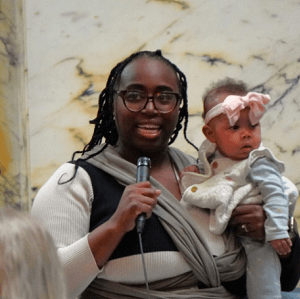
In Detroit and its surrounding counties, researcher Shawnita Sealy-Jefferson argues that residential eviction is deeply fueling the nation’s maternal health crisis, “especially for Black women.” She writes that stable housing is “a cornerstone of maternal health, shaping birth outcomes long before labor begins,” yet many Black women are “carrying life while carrying terror” as they face eviction threats during pregnancy.
Sealy-Jefferson launched the Social Epidemiology to Combat Unjust Residential Evictions (SECURE) Study to “quantify the magnitude and severity of court-ordered and illegal residential evictions” among Black women and to center their experiences. Surveying more than 1,400 Black women of reproductive age across Wayne, Oakland, and Macomb counties, her team found that those living in neighborhoods with higher eviction threat during pregnancy were “68% more likely to have a preterm birth.”
She describes this as “structural violence showing up in Black women’s bodies,” noting that these outcomes are “not driven by pre-existing medical conditions but are the results of a system that consistently fails to protect Black women.” Women in high-eviction neighborhoods were “between 2 and 4 times more likely to have emotional suffering during pregnancy,” and even “observing neighbors being evicted” generates toxic stress that harms maternal and infant health.
Framing eviction as “a reproductive justice issue,” Sealy-Jefferson calls for confronting the racial wealth gap, urging “government-funded reparations for Black American descendants of U.S. slavery” as “the best way to eliminate the racial wealth gap that places Black families at heightened risk for eviction.”
See: “Housing, Health, and Humanity: Why Eviction Is a Reproductive Justice Issue” (August 14, 2025)