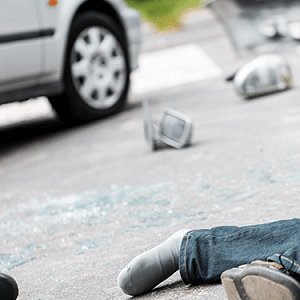
Black and Hispanic pedestrians face dramatically higher risks of being killed by vehicles on American streets, exposing how decades of discriminatory urban planning have created deadly consequences for minority communities. Recent research reveals that Black pedestrians are more than twice as likely to be struck and killed per mile walked compared to white pedestrians, while Black cyclists face risks 4.5 times higher.
The disparity stems from historical patterns of disinvestment and destructive highway construction that carved through minority neighborhoods. Formerly redlined areas, graded D for lending risk in the mid-20th century, experience pedestrian fatality rates more than double those of higher-graded neighborhoods. These communities lack basic safety infrastructure like sidewalks, crosswalks, and adequate lighting, while high-speed arterial roads designed to move suburban commuters tear through residential areas.
In Los Angeles, Black residents comprise 8.6 percent of the population but represent over 18 percent of pedestrian deaths. Philadelphia’s Roosevelt Boulevard, cutting through predominantly Black North Philadelphia, has earned the grim nickname “Corridor of Death,” with six of its 14 miles lacking sidewalks entirely.
Engineering solutions like speed humps, lane narrowing, and better lighting prove far more effective than driver education at preventing deaths. Cities adopting comprehensive Vision Zero programs have seen dramatic improvements—Oslo and Helsinki recorded zero and two pedestrian deaths respectively in recent years. However, American cities have struggled with insufficient funding and political will, allowing preventable deaths to continue devastating communities that historically faced systematic exclusion from transportation planning decisions.
See: “American Road Deaths Show an Alarming Racial Gap” (April 26, 2023)