Asthma Health Disparities in the United States
Asthma is one of America’s most common chronic diseases, affecting more than 28 million children and adults and sending hundreds of thousands to emergency departments every year. It leads to missed school, lost workdays, preventable hospitalizations, and in the most severe cases, death.
Asthma can often be managed successfully, yet the medications, care, and environmental conditions that make that possible are not shared equally across communities. The heaviest burden falls on people living in communities with more air pollution, substandard housing, and limited access to primary and specialty care, making asthma not just a medical condition, but a reflection of unequal living conditions and unequal access to safe air.
An average of nine people die from asthma every day in the United States. Almost all of those deaths are preventable. They’re not random.
Trends in Asthma Disparities
- Powerful New Asthma Therapies Not Reaching Everyone: New Biologics sharply cut severe attacks but reach the highest-burden patients last.
- Climate Change Increasing Asthma Triggers: Warming has lengthened pollen season and worsened fire smoke.
- Funding for CDC’s Asthma Prevention Programs Under Attack: Gutted by Trump administration, restored for now by Congress
Part 1: Who Bears the Greatest Burden of Asthma?
Part 2: Why Do These Asthma Disparities Exist?
Part 3: Solutions That Work
Part 4: Recent News
Part 5. Read More
Asthma Disparities NewsWire
Part 1: Who Bears the Greatest Burden of Asthma
Black Americans
No group suffers from asthma more. Black Americans are roughly twice as likely to die from asthma as white Americans and nearly six times more likely to visit the ER. Black children are nearly four times as likely to die as the national average, with ER visit rates of 89 per 10,000 versus 14 for white children. This gap is not narrowing.
American Indians and Alaska Natives
American Indian and Alaska Native communities have some of the highest asthma rates in the United States. In 2021, 13.3% of AI/AN adults had asthma, the highest prevalence among major racial groups, and AI/AN children had asthma at a rate 42% higher than children overall.
There’s wide variation among tribal nations, and the burden is not confined to reservations. In some states, most AI/AN people with asthma live in urban areas, and the rate of asthma runs higher at every income level.
Puerto Ricans
Puerto Ricans experience an exceptionally high asthma burden, with rates substantially higher than those of other Hispanic populations. Remarkably, this is true both on the island and on the mainland. In New York City, 22% of Puerto Rican children have asthma; in Puerto Rico, childhood rates reach 24–46%. The persistence of this burden across such different environments points to a combination of genetic susceptibility, chronic stress, poverty, and limited access to care.
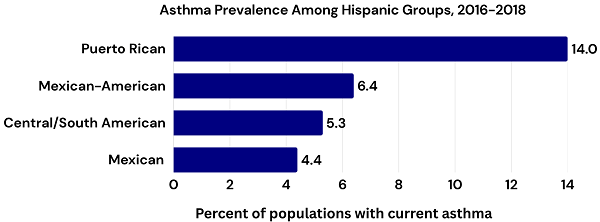
Source: American Lung Association
Low-income families
Income shapes asthma risk throughout life. Asthma prevalence, emergency department visits, and hospitalizations all rise as income falls. Children who spend their entire childhood in poverty are twice as likely to develop persistent asthma by age 14 as those who never experience poverty, while children whose families move out of poverty have a 60% lower risk.
Part 2: Why Do These Asthma Disparities Exist?
Asthma is a chronic inflammatory disease of the airways. Many of the conditions that fuel that inflammation are experienced unequally across communities, helping drive persistent disparities in asthma illness, hospitalizations, and deaths.
1. Air Pollution
Poor air quality is a direct cause of asthma and a trigger of attacks. Outdoor pollutants such as ozone, particulate matter, diesel exhaust, and industrial emissions inflame the airways and increase asthma risk over time. Fine-particle pollution (PM2.5) is especially harmful because the particles are small enough to penetrate deep into the lungs and enter the bloodstream, where they can trigger asthma attacks, worsen symptoms, reduce lung function, and increase hospitalizations.
However, Americans are not equally exposed to these pollutants.
Decades of research confirm that low-income communities and communities of color are disproportionately located near highways, power plants, ports, and industrial facilities. Here some stark examples:
- A national survey of EPA Toxic Release Inventory sites found that Black Americans were more likely to live within one mile of a polluting industrial facility.
- A survey of commercial hazardous waste facilities built between 1966 and 1995 showed a consistent pattern of locating new facilities in communities where people of color and low-income residents already lived.
- National emissions data revealed Black and Hispanic Americans were more likely to be exposed to pollution from freight trucks, due to the concentration of major trucking routes, warehouses, and freight corridors near communities of color.
This pattern is not coincidence. It reflects decades of zoning decisions, redlining, and political disenfranchisement that concentrated environmental hazards in neighborhoods with the least power to resist them.
What Can Be Done: Tighter limits on factory and tailpipe pollution, cleaner trucks and buses, and more neighborhood air monitoring can ease asthma.
Who Breathes Dirty Air?

In a landmark 2022 study, Harvard researcher Francesca Dominici and her colleagues mapped historic fine-particle air pollution (PM2.5) levels across 32,000 U.S. ZIP codes from 2000 to 2016.
They found that PM2.5 exposure increased as the share of Black or Hispanic residents in a ZIP code increased, but decreased as the share of White residents increased. Income levels didn’t explain the difference. Although air quality improved during the study period, racial disparities in exposure did not.
The findings provided strong evidence that communities bearing the greatest asthma burden are also more likely to breathe polluted air.
2. A House Full of Triggers You Can't Escape
The most potent asthma triggers are often inside the home. Cockroach allergens, mold, dust mites, rodent dander, and secondhand smoke inflame airways and drive attacks and all are far more prevalent in poorly maintained, overcrowded housing.
Low-income renters have the least power to demand repairs, face the slowest code enforcement, and have the fewest resources to relocate. The same poverty that increases exposure to indoor triggers also blocks the path to safer housing.
What can be done: Fixing leaks and mold, controlling pests, and improving ventilation can remove the everyday triggers that keep asthma flaring.
The Mouse and Cockroach Asthma Detectives

Elizabeth Matsui of the Johns Hopkins Bloomberg School of Public Health and her colleagues demonstrated that allergens found in mouse urine are widespread in inner-city homes and schools and are strongly associated with asthma symptoms, attacks, emergency visits, and reduced lung function among sensitized children.
Her work highlighted how environmental conditions common in underserved neighborhoods can worsen asthma and deepen health inequities.

David Rosenstreich of the Albert Einstein College of Medicine and his colleagues demonstrated in 1997 that inner-city children who were both sensitized to cockroach allergens and heavily exposed to them in their homes experienced more asthma symptoms, missed school days, hospitalizations, and unscheduled medical visits than other children.
His work reshaped understanding of why asthma is so severe among many inner‑city children.
From Mold to Asthma to Homelessness
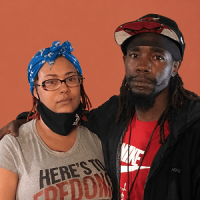
Angel and Dedric Harris’s story is a too familiar one: how substandard housing can turn asthma into a life-upending crisis.
Within months, the Milwaukee home they rented in late 2020 was leaking water through ceilings and walls, with black mold creeping room to room. Both adults had asthma, and turning on the heat only spread the spores.
As Angel’s symptoms escalated, she relied on two inhalers, a nebulizer, and repeated hospital visits, and the couple sent all five asthmatic children to live with relatives.
Their complaints went nowhere. Milwaukee doesn’t regulate mold, so the landlord was never required to remove it. After withholding rent in protest, the Harrises were evicted in 2022 and left homeless.
3. Climate Change
Climate change is raising pollen levels, lengthening pollen seasons and driving larger, more frequent wildfires across much of the country. Communities already burdened by asthma face a compounding climate risk: hotter urban neighborhoods that intensify pollen production and wildfire smoke that travels hundreds of miles to degrade air quality far downwind of any fire.
Families and renters with limited resources and poorly maintained housing are often least able to prevent pollen and smoke from entering their homes and to afford running air conditioning with the windows closed, replacing HVAC filters, maintaining standalone air purifiers, or relocating during severe smoke events.
What can be done: Cutting the pollution that warms the planet, expanding tree cover, and warning families on bad-air days can lower exposure.
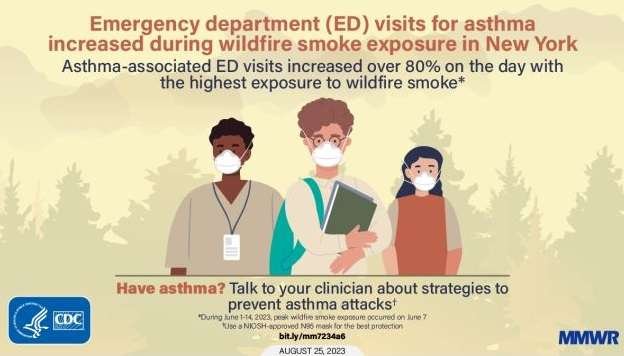
During June 6–8, 2023, smoke from Eastern Canadian wildfires caused “unhealthy” or “very unhealthy” levels of particulr matter across New York state. According to CDC, Asthma-associated Emergency Department visits spiked across New York, with twofold increases in the Eastern Lake Ontario and Central regions and a nearly threefold increase among older children and young adults.
How Climate Change Fuels Asthma

Lewis Ziska, an environmental health researcher at Columbia University’s Mailman School of Public Health, has done more than perhaps any single researcher to establish how climate change worsens allergies and asthma.
His greenhouse experiments showed that a doubling of atmospheric carbon dioxide can boost ragweed pollen production by 60 to 100 percent per plant, proving that CO₂ acts as a fertilizer for allergenic weeds. His field studies demonstrated that global warming has lengthened ragweed seasons and made pollen itself more allergenic.
Ziska’s work laid the foundation for understanding how a warming climate falls hardest on those already struggling to breathe. Read more
4. Poverty
Poverty shapes nearly every asthma risk factor simultaneously. It determines where families live, what they breathe, whether they can afford inhalers, and whether they have a regular doctor.
A 2023 study titled “You Have to Rob Peter to Pay Paul So Your Kid Can Breathe” documented the dilemma of families who reported skipping their own medical care, cutting back on groceries, and going into debt to pay for a child’s controller inhaler. When families must choose between the electric bill and the inhaler, asthma goes unmanaged and the emergency room becomes the only option, at far greater cost to everyone.
What can be done: Stable housing, cash assistance, and steady jobs can ease the financial strain that makes asthma harder to control.
"You Have to Rob Peter to Pay Paul So Your Kid Can Breathe"
This is the actual title of a 2023 study on how families absorb the cost of asthma care. When asthma medication is unaffordable, families don’t simply go without. They make hard substitutions, borrowing from one need to cover another.
- They borrow money or cut back on necessities.
- They take on debt.
- Parents go without their own care so the child gets medication.
- Children use less medication than prescribed.
- They substitute alternative therapies for prescribed medicine.
- They shop the system to shave the price.
5. Insufficient Health Insurance
Without consistent insurance coverage, asthma care collapses into crisis management. Uninsured and underinsured patients skip controller medications, avoid specialist visits, and delay care until symptoms become emergencies.
Despite covering nearly half of U.S. children with asthma, Medicaid carries serious limitations. Low reimbursement and its administrative burden push many physicians, especially allergists and pulmonologists, to limit or refuse Medicaid patients, creating “phantom networks” where directory listings overstate real availability. Families face longer waits and higher appointment-denial rates than privately insured peers; Medicaid-insured children were 55% less likely to receive specialty asthma care, one claims study found.
Plans also apply utilization controls, such as prior authorization, step therapy (“fail first”), and quantity limits, that delay starting or adjusting optimal treatment.
Children on Medicaid are legally entitled to all medically necessary care, including specialty referrals, while hard caps on services are barred. But that entitlement creates no delivery mechanism: no routine system escalates serious cases to specialists, so many children rely on emergency departments for acute attacks rather than the ongoing monitoring, medication adjustment, and environmental management that actually control asthma.
What can be done:Expanding coverage and capping out-of-pocket costs can put inhalers, controller medications, and regular asthma care within reach.
How Climate Change Fuels Asthma
Since 2015, the American Lung Association’s Asthma Care Coverage Initiative has audited all 50 state Medicaid programs, mapping gaps in coverage of guidelines-based care.
Using that data, the ALA lobbies state Medicaid agencies and Congress to remove barriers like prior authorization and step therapy and to protect funding—work that disproportionately benefits the low-income children of color who rely on Medicaid.
8. Limited Access to Primary and Specialty Care
Asthma needs consistent management, not just crisis response, yet many in high-burden communities lack a regular source of care. Insurance instability, high out-of-pocket costs, and a shortage of primary care providers and specialists in underserved areas all stand in the way—as do practical barriers like hourly jobs without paid leave, unreliable transportation, and childcare needs that make weekday appointments hard to keep.
Without ongoing care, patients are less likely to have a written asthma action plan, receive inhaler-technique teaching, undergo lung-function testing, or get referred for newer biologic treatments that require specialist authorization. Asthma then goes undiagnosed or undertreated.
What can be done: More local clinics, more specialists, and help with transportation can give patients consistent, preventive asthma care.
6. Medication Costs
Asthma medications are among the most expensive in routine medicine. The same inhaler that sells for $7 in France costs nearly $500 in the United States. Same molecule, same manufacturer, different healthcare system. Major manufacturers agreed to cap out-of-pocket inhaler costs at $35 a month. Real relief, but only for the insured. The uninsured and many on Medicaid and Medicare can still face the full price.
The newest biologic therapies, which can sharply reduce severe attacks, run thousands of dollars per month without insurance. The predictable result: rationed doses, skipped refills, and emergency rooms full of patients.
What can be done: Capping out-of-pocket prices, covering the uninsured, and expanding low-cost options can put asthma medications within everyone’s reach.
"You Have to Rob Peter to Pay Paul So Your Kid Can Breathe"
This is the actual title of a 2023 study on how families absorb the cost of asthma care. When asthma medication is unaffordable, families don’t simply go without. They make hard substitutions, borrowing from one need to cover another.
- They borrow money or cut back on necessities.
- They take on debt.
- Parents go without their own care so the child gets medication.
- Children use less medication than prescribed.
- They substitute alternative therapies for prescribed medicine.
- They shop the system to shave the price.
8. Healthcare Bias
Healthcare bias shapes asthma care before a prescription is written. Chronic wheezing in minority children is frequently misdiagnosed as bronchitis or chalked up to poor fitness rather than recognized as airway disease, delaying diagnosis until the condition is severe.
Physicians underestimate asthma severity more often in Black and Hispanic patients, assume poor compliance, and are less likely to escalate to controller medications or advanced therapies even when the disease is uncontrolled. Language barriers and cultural misunderstandings compound the problem, leading to rushed visits and less shared decision-making. A history of mistreatment makes some patients less likely to seek care early.
What can be done: Training clinicians to recognize bias, listen closely, and follow treatment guidelines can help patients get equal asthma care.
Unequal Assessment, Unequal Asthma Care

Sande Okelo’s interest in asthma is personal. As a child he suffered from asthma, making numerous emergency-room trips.
Now a pediatric pulmonologist at UCLA, Okelo found in an earlier landmark study at Johns Hopkins University that physicians were more likely to underestimate asthma severity in Black children than in White children, increasing the risk that their treatment would be less aggressive.
He later showed that Black children often endure more severe illness, including higher hospitalization rates, before their referral to specialists. For solutions, Okelo developed a validated questionnaire that, in trials, improved how accurately physicians assess a child’s asthma, addressing the kind of misjudgment his earlier work had documented.
7. Chronic Stress
When Stress Gets Under the Skin

Dean for Public Health at the Icahn School of Medicine at Mount Sinai, Rosalind Wright helped establish that chronic stress is not merely a trigger for asthma attacks but may shape who develops the disease at all.
Through long-running birth-cohort studies — the ACCESS and PRISM projects — she traced how a mother’s stress during pregnancy can alter a child’s developing immune system, raising asthma risk before birth.
Her signature insight is synergy: pollution and chronic stress don’t just add up, they multiply each other’s effects, so the same dirty air harms a stressed child far more. Her work links social disadvantage to asthma’s biology.
8. Underrepresentation in Critical Research
Clinical trials determine which asthma treatments are effective, approved, and prescribed. So who’s enrolled in this research shapes the evidence for everyone. However, when some groups are under-represented, real differences in how they would respond to new treatments can go undetected.
Bronchodilators are the backbone of asthma treatment. However, African American and Puerto Rican children can have a weaker response to albuterol, the most familiar bronchodilator, linked in part to genetic variants they carry in their DNA. The problem isn’t just whether a drug works, it extends to how much to give, and what risks to warn about.
What can be done: Recruiting participants from affected communities and easing the burden of enrolling can make asthma research work for everyone.
Exposing Medicine's Blind Spot

A pulmonologist and physician-scientist at UC San Francisco, Esteban G. Burchard has spent his career on a problem hiding in plain sight: the medicines used to treat asthma were tested largely on white patients, then prescribed to everyone.
His research showed that Puerto Rican and African American children respond significantly less to albuterol — the world’s most common asthma drug — than white children, even as they suffer the highest asthma rates. R
ather than just document the gap, he built the cohorts to close it, founding the GALA and SAGE studies, among the largest gene-environment asthma studies of minority children ever assembled.
8. Dependence on Emergency Department Care
Emergency rooms treat the crisis but not the disease. They relieve an acute attack, then discharge the patient without the ongoing management—controller medications, monitoring, an action plan, trigger education—that prevents the next one.
Frequent ER visits are themselves a sign that the underlying asthma is poorly controlled. So patients return again and again, each visit costly and disruptive but never addressing the underlying inflammation. This reactive cycle raises the risk of severe attacks, hospitalization, and death.
Because high-burden communities rely most on ERs, they absorb the worst of it—more emergencies, lost school and work time, and worse outcomes—deepening existing disparities.
What can be done: Reliable preventive care, asthma education, and timely follow-up can keep manageable asthma from becoming an emergency.
Part 3: Asthma Solutions That Work
Asthma disparities did not arise overnight, and they will not disappear through better medications alone.
Yet across the country, researchers, physicians, community advocates, and policymakers have developed solutions that are making a measurable difference. Some bring healthcare directly into neighborhoods.
Others improve housing, reduce environmental exposures, expand access to treatment, or address the effects of climate change and poverty. Many focus on the conditions that make asthma worse long before a child arrives in an emergency room.
This section highlights the most promising evidence-based approaches—and the people behind them—that are helping vulnerable communities breathe easier.
1. Improving air quality for asthma patients
New York City’s Clean Heat Program
Intervention: Required thousands of buildings to stop burning heaviest heating oils and switch to cleaner fuels.
Impact: Estimated prevention of roughly 780 deaths, 1,600 asthma-related emergency room visits, and 460 respiratory and cardiovascular hospitalizations each year, with the biggest improvements in the dense, high-emitting neighborhoods that had the dirtiest air. 🔗 https://www.nyc.gov/site/sustainability/our-programs/nyc-clean-heat.page
Southern California’s Vehicle and Port Emission Controls
Intervention: Two decades of tightening car, truck, and ship emissions across the Los Angeles basincut fine-particle pollution by roughly half.
Impact: As pollution fell, far fewer children reached adolescence with dangerously low lung function. Children who had asthma were among those who benefited most. 🔗 https://newsinhealth.nih.gov/2015/04/cleaner-air-tied-healthier-lungs-kids
EPA’s Diesel Emissions Reduction Act (DERA) Bus Program
Intervention: Federal grants retrofitted or replaced older diesel school buses across the country, cutting children’s exposure to exhaust on their daily commute.
Impact: In state of Washington, ‘districts installing clean-diesel retrofit technology saw a 23% drop in monthly pediatric asthma and bronchitis hospitalizations, and a 37% drop in pneumonia hospitalizations. 🔗 https://www.epa.gov/dera
How One Girl's Asthma Helped Ban Oil Drilling in L.A. Neighborhoods

Nalleli Cobo grew up near 21 oil wells in a largely Latino neighborhood in South Los Angeles. At nine, she developed asthma, nosebleeds, headaches, and heart palpitations, symptoms shared with neighbors.
Rather than move, she and her mother helped launch “People Not Pozos (“People Not Wells”), filing complaints, testifying at hearings, and suing Los Angeles over racism in oil well permitting.
That helped lead to a ban on new drilling, an end to existing wells, and restrictions in California on new wells constructed near homes. At age 21, she won the prestigious 2022 Goldman Environmental Prize for her work.
2. Lowering exposure to indoor asthma triggers
NIH’s Inner-City Asthma Study (ICAS)
Intervention: This study placed HEPA air cleaners, allergen-proof mattress and pillow covers, and pest control in the homes of 937 children with moderate-to-severe asthma across seven cities.
Impact: Fewer symptom days and lower asthma morbidity, benefits persisting into the year after the active intervention ended. 🔗 https://www.nejm.org/doi/full/10.1056/NEJMoa032097
Green & Healthy Homes Initiative (GHHI)
Intervention: Replaced one-off repairs with a comprehensive home intervention that provided structural fixes, mold remediation, pest control, and weatherization for low-income families in substandard housing.
Impact: In Baltimore, a 66% drop in asthma-related hospitalizations and estimated savings of $5–$14 for every dollar invested. 🔗 https://www.greenandhealthyhomes.org
Boston Children’s Hospital Community Asthma Initiative (CAI)
Intervention: Community health workers sent into homes of children with poorly-controlled asthma delivered education and home assessments and removed asthma triggers with pest control and allergen-proof bedding.
Impact: Asthma-related hospitalizations fell about 85%, emergency room visits dropped about 68% and the program returned $2.56 in savings for every $1 invested. 🔗 https://www.childrenshospital.org/programs/community-asthma-initiative
Treating Homes, Not Just Patients

Tyra Bryant-Stephens turned a single-city program into a national model for addressing asthma disparities at their source.
A Philadelphia pediatrician, she founded the Community Asthma Prevention Program at Children’s Hospital of Philadelphia in 1997, building one of the country’s longest-running community asthma efforts.
Her program trains community health workers to deliver home visits in under-resourced neighborhoods, logging more than 21,000 visits to reduce triggers like mold, pests, and dust in the homes where children live.
In 2018 she launched CAPP+, partnering with repair agencies to fix the structural causes—leaking roofs, plumbing, gaps that admit pests—rather than treat symptoms alone.
Read more
3. Countering the impact of climate change
Interventions to address the root cause of climate change, such as cutting emissions that lengthen pollen seasons and fuel wildfires, operate on a timescale of decades, far too slow to show up in asthma data yet. What exists instead are efforts to help vulnerable people cope with climate-driven exposures.
Bay Area Healthy Air for All (RAMP / Air District)
Intervention: Free HEPA air cleaners were distributed to low-income residents with poorly controlled asthma hit hardest by worsening wildfire smoke in the San Francisco Bay Area.
Impact: Reached about 2,000 of the region’s most vulnerable residents and produced a guide now used by other California asthma programs. 🔗 https://rampasthma.org/our-goals/healthy-air-for-all/
California’s Asthma Remediation Benefit (CalAIM Community Supports)
Intervention: Medicaid pays for in-home removal of asthma triggers for low-income members with poorly controlled asthma.
Impact: By making climate-driven indoor exposures a covered medical benefit rather than a one-time charity effort, it builds a permanent, statewide funding channel for the kind of home protection that wildfire smoke makes increasingly urgent. 🔗 https://www.dhcs.ca.gov/calaim-transforming-medi-cal/enhanced-care-management-and-community-supports/
Louisville Green Heart Project
Intervention: Planted more than 8,000 trees and shrubs in underserved South Louisville neighborhoods to test whether this would reduce pollution exposure and chronic-disease risk.
Impact: A key inflammation marker dropped 13% among residents, the first controlled evidence that neighborhood greening can measurably improve health, especially relevant as cities warm. 🔗 https://greenheartlouisville.com/
3. Countering poverty
5. Lack of Health Insurance
8. Limited Access to Primary and Specialty Care
5. Lowering the high cost of asthma medications
State Inhaler Out-of-Pocket Caps.
Intervention: Some states have enacted monthly ceilings on what patients pay for prescription inhalers, rescue and controller alike, in state-regulated insurance plans. Unlike manufacturer programs, these caps apply across brands rather than to one company’s products, directly preventing the cost-driven rationing that drives preventable asthma attacks. 🔗 https://www.lung.org/blog/affordable-inhalers
Manufacturer Inhaler Price Caps.
Intervention: After a Congressional investigation into why inhalers cost far more in America than abroad, three major manufacturers voluntarily capped out-of-pocket costs at $35 per month for their asthma and COPD inhalers. Commercially insured and uninsured patients receive automatic pharmacy discounts. Patients on Medicaid and Medicare are generally excluded. 🔗 https://aafa.org/aafa-statement-on-asthma-inhaler-price-caps/
Elimination of Out-of-Pocket Copays. (British Columbia Fair PharmaCare)
Intervention: British Columbia eliminated copayments in 2019 for residents earning under $13,750.
The impact: Use of controller medications increased, while rescue-inhaler use decreased, the exact shift from reactive to preventive treatment that reduces attacks. 🔗 https://www.atsjournals.org/doi/10.1513/AnnalsATS.202402-130OC
8. Addressing healthcare bias towards certain groups
Intervention: Healthcare bias is hard to show clean successes for, not because nothing helps, but because bias is diffuse and hard to measure directly. The strongest programs reshape encounters so there’s less room for bias to drive treatment.
BOAT (Better Outcomes of Asthma Treatment)
Intervention: In a study of adults with poorly controlled asthma, more than half minority or low-income, patients received either shared-decision making with non-physician care managers or the usual physician-directed care.
Impact: Making the patient’s priorities an explicit part of the prescribing decision resulted in improved controller-medication use and clinical outcomes. 🔗 https://pubmed.ncbi.nlm.nih.gov/20019345/
BREATHE Shared Decision-Making Intervention
Intervention: A small study of Black patients with uncontrolled asthma tested a brief, physician-delivered structured conversation during a routine visit that addressed the patients’ mistaken beliefs about asthma and inhaled steroids.
Impact: Better asthma control and greater engagement in a high-disparity population’s own treatment decisions. 🔗 https://onlinelibrary.wiley.com/doi/10.1111/jan.14646
Community Health Worker In-Home Asthma Programs.
Intervention: These deploy community health workers, often from same neighborhoods and backgrounds as the families they serve, to provide asthma education, home trigger assessment, and navigation connecting high-risk families to the medical system.
Impact: Among predominantly Black and Hispanic pediatric patients, improved asthma control and reduced emergency visits and hospitalizations. 🔗 https://www.cdc.gov/asthma/interventions/index.html
6. Lowering stress among asthma patients
Intervention: A partnership between the Regional Asthma Management and Prevention (RAMP) program and seven home visiting programs distributed HEPA air purifiers paired with in-home education to low-income residents with poorly controlled asthma in six San Francisco Bay Area counties.
Impact: Wildfire smoke and particulate matter exposure was reduced for more than 2,000 of the region’s most vulnerable residents.
Source: Regional Asthma Management and Prevention (RAMP) — Public Health Institute https://rampasthma.org/blog/scaling-up-the-distribution-of-air-cleaners-for-low-income-people-with-asthma/
7. Broaden the range of asthma patients enrolled in clinical trials
NIH Inner-City Asthma Consortium (ICAC).
Intervention: A nationwide National Institutes of Health-funded clinical trials network intentionally enrolls low-income minority children to test immune-based asthma therapies.
Impact: Since 2002, conducted landmark trials exclusively within underserved urban populations. 🔗 https://www.niaid.nih.gov/clinical-trials/inner-city-asthma-consortium
NIH AsthmaNet BARD Trial.
Intervention: Recruited exclusively African American children and adults to identify race-specific differences in responses to standard asthma drugs.
Impact: Achieved 100% targeted minority enrollment of 280 children, revealing distinct genetic and environmental factors affecting therapy outcomes in Black patients. 🔗 https://news.emory.edu/stories/2014/02/fitzpatrick_asthma_african_americans/index.html
4. Breaking the cycle of emergency room asthma care
IMPACT DC Asthma Clinic (Children’s National, Washington DC).
Intervention: Provides 90-minute follow-up visits within two weeks of an Emergency Department visit for low-income minority children, with asthma education, care planning, and primary care coordination.
Impact: A trial of 488 predominantly Black, economically disadvantaged children showed ED visits were nearly cut in half over six months. 🔗 https://www.childrensnational.org/get-care/departments/impact-dc-asthma-clinic
Nationwide Children’s Hospital Primary Care Asthma QI Initiative.
Intervention: A multisite pediatric primary care network using standardized asthma action plans, the Asthma Control Test, and specialty clinic visits to shift high-risk Medicaid children away from ED dependence.
Impact: ED visits dropped 33% over nine years. 🔗 https://pediatricsnationwide.org/2024/04/03/quality-improvement-approach-reduces-pediatric-asthma-emergency-department-visits-by-33/
Disparity Disruptors
Here are some of the many Asthma Disparity Disruptors, women and men who have worked to identify, address, and publicize the issue of asthma disparities in the United States.

Floyd J. Malveaux (1940-2020)
Howard University
Documented racial disparities in asthma outcomes and helped build the infrastructure to address them through the Merck Childhood Asthma Network.
Read More

Gary Adamkiewicz
Harvard T.H. Chan School of Public Health
Helped establish poor housing quality as an environmental justice issue and showed that healthier housing can dramatically reduce asthma attacks.
Read More

Neeta Thakur
University of California, San Francisco
Helped explain how structural racism, poverty, redlining, and social adversity become biologically embedded and worsen asthma outcomes.
Read More

Rosalind Wright
Icahn School of Medicine at Mount Sinai
Established chronic stress, violence exposure, and maternal stress as biological contributors to asthma disparities.
Read More

Esteban G. Burchard
University of California, San Francisco
Showed that asthma medications do not work identically across populations and pioneered inclusion of Latino and African American populations in asthma genetics research.
Read More

David L. Rosenstreich
Albert Einstein College of Medicine
Led the landmark Inner-City Asthma Study that identified cockroach allergen exposure in substandard housing as a major driver of asthma disparities among urban children.
Read More

Juan C. Celedon
University of PittsburghDefined why Puerto Ricans experience the highest asthma burden in the United States, integrating genetics, environment, stress, and social determinants into a single framework.
Read More

Tyra Bryant-Stephens
Children’s Hospital of Philadelphia
Demonstrated that community health workers and home-based interventions can substantially reduce asthma disparities in under-resourced neighborhoods.
Read More

Elizabeth Matsui
Dell Medical School at The University of Texas at Austin
Demonstrated that reducing indoor allergen exposure in disadvantaged housing can improve asthma outcomes more effectively than simply increasing medication.
Read More

Wanda Phipatanakul
Harvard Medical School
Demonstrated that environmental interventions plus case‑management in schools and homes can significantly narrow urban pediatric asthma gaps
Read More

Kenneth Mendez
Asthma and Allergy Foundation of America
Led the advocacy campaign that produced the $35 inhaler price cap.
Read More
A Final Word
Asthma is one of the most manageable chronic diseases in medicine. The drugs work. The interventions work. The evidence on what drives disparities — and what closes them — is not in dispute. What is in dispute, right now, is whether the country will continue to let ZIP code, race, and income determine who gets to breathe.
If You or Someone Near You Is Having an Asthma Attack
According to the National Heart, Lung, and Blood Institute (NHLBI), knowing what to do in the first minutes of an asthma attack can make the difference between a manageable episode and a medical emergency. An attack can begin with coughing, chest tightness, wheezing, or lightheadedness.
Here is how to respond effectively:
Act immediately: Use your reliever inhaler as soon as symptoms start.
Adjust your posture: Sit upright—lying down makes breathing harder. Stay as calm as you can, and breathe slowly.
Monitor your symptoms: If symptoms don’t improve shortly after using your reliever, seek care. Go to the emergency room if at-home medicines aren’t working.
When to Seek Urgent Medical Care
You should seek care right away—without waiting to see if things improve—if you or your child:
Have been hospitalized for asthma in the past year.
Have had a life-threatening asthma attack before.
Recently needed oral corticosteroids.
Call 911 immediately if breathing becomes too labored to speak in full sentences, or if lips or fingernails appear bluish.
Staying Prepared
Always carry a quick-relief inhaler with you. Working with your provider to create a written asthma action plan in advance is the most reliable way to know exactly what to do when an attack happens.
For full guidance, visit nhlbi.nih.gov/health/asthma/attacks.
