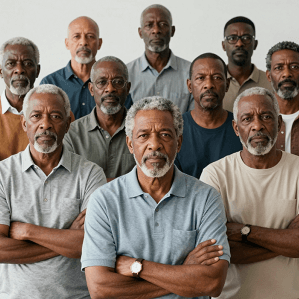
Black men continue to bear a disproportionate burden of prostate cancer, facing a 70 percent higher incidence compared to white men and the highest mortality rates in the United States. According to Dr. Adam B. Murphy of Northwestern University, Puerto Rican men now also rank among the groups with the highest prostate cancer mortality.
The Prostate Cancer Foundation has issued new guidelines recommending earlier baseline screening for Black men, starting at age 40 to 45 rather than the standard 50 to 55, with continued monitoring until age 70. This adjustment recognizes the elevated risk these populations face.
However, current screening tools may be failing Black men at alarming rates. As prostate cancer prevalence increases in high-risk populations, the negative predictive value of screening tools declines, meaning clinically significant disease is more likely to be missed if existing tools aren’t recalibrated for this population.
Dr. Murphy points to troubling data showing that MRI-informed risk assessment tools underperform in Black men, with lower sensitivity and negative predictive value compared to non-Black men. MRI visibility of prostate tumors is significantly lower in Black men, suggesting current scoring thresholds may be insufficient.
While biomarker platforms like the Stockholm-3 assay and 4Kscore show promise, their calibration and race-stratified validation remain incomplete. Molecular differences in prostate tumors across racial groups may explain these disparities. Dr. Murphy emphasizes that recalibration of biomarkers and imaging tools, coupled with broader validation studies across diverse populations, is essential to reduce disparities and improve outcomes.
See: “Prostate Cancer Risk Assessment in Black Men” (September 15, 2025)