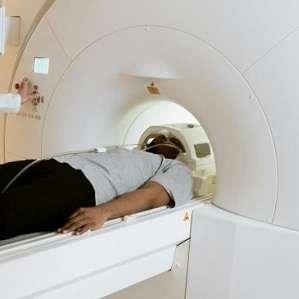
Black patients experience significantly higher rates of motion artifacts during MRI scans compared to white patients, adding to growing concerns about racial inequities in medical imaging quality. A new study analyzing nearly 69,000 MRI reports reveals troubling patterns that may compromise diagnostic accuracy for vulnerable populations.
Researchers at the University of Texas Southwestern Medical Center examined consecutive MRI reports from 2022 at two healthcare systems and found that Black patients had 18% higher odds of motion during scans compared to their white counterparts. Motion artifacts can degrade image quality, potentially interfering with lesion detection and creating misleading findings that affect clinical decision-making.
The disparities extend beyond race. Elderly patients aged 85 and older showed 91% higher odds of motion compared to younger adults, while men experienced 14% higher rates than women. Patients with severe obesity faced 48% greater odds of motion artifacts.
Lead researcher Takeshi Yokoo emphasized that “socio-structural factors are likely shaping patient experiences rather than a biological explanation for increased motion.” This finding challenges assumptions about the root causes of these disparities and points toward systemic issues in how imaging services are delivered.
The research team called for “patient-centric precision imaging strategies, such as individualized protocol optimization and pre-scan interventions,” including tailored instructions and comfort-focused positioning. They stressed that addressing these patterns through workflow design remains critical for “promoting equitable, high-quality MRI across diverse patient populations.”
See: “Motion on MRI inordinately affects elderly, male, and Black patients” (January 23, 2026)