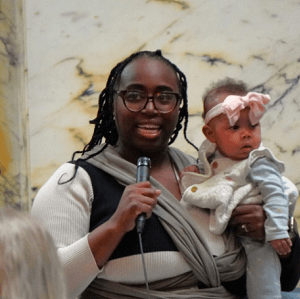
Navigating birth and postpartum care can be daunting, especially for Black mothers who face acute health disparities. In New York City and the Lower Hudson Valley, Teresa Lasbrey Peters is one of many doulas changing that reality with hands-on support and advocacy. Working with the Northern Manhattan Perinatal Partnership and the Citywide Doula Initiative, she helps make doula services accessible to people covered by Medicaid—individuals who, as she stresses, “normally wouldn’t be able to afford our services.”
Lasbrey Peters describes her mission as offering comfort measures, resources, and empowerment before, during, and after childbirth. “Our presence during birth actually reduces people’s experience of pain, according to studies, so having a doula at your birth can have an important impact in a very good way,” she says. Clients are guided through decision-making with practical tools, so they feel in control even in moments of uncertainty. Beyond birth, doulas continue assisting with newborn feeding, managing family adjustments, and supporting both parents with mental and emotional health in a high-stress time.
Lactation support is a cornerstone of her work. “Breastfeeding saves lives—not just babies’ lives, but breastfeeding actually saves the lives of the people that are breastfeeding,” Lasbrey Peters explains, citing reductions in risks for breast and reproductive cancers. She also notes that partners can be vulnerable to postpartum depression and benefit from doula support.
Doulas, says Lasbrey Peters, “are here to uphold people’s choices and remind them of their choices and then affirm their choices.” By holding space for families, doulas help ensure that harm is mitigated, and everyone leaves feeling accomplished.
See: “Providing Comfort, Ease, and Resources: The Life of a Doula” (January 13, 2025)