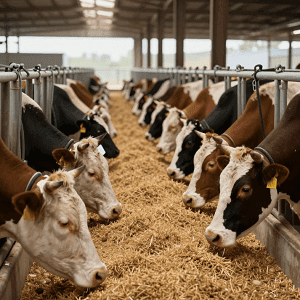
Large-scale animal feeding operations, known as CAFOs, are a growing public health concern, and a new multi-state study highlights how their impacts fall unevenly on disadvantaged communities. Researchers examined data from seven states — including North Carolina, South Carolina, Texas, Iowa, and Wisconsin — and found that exposure to CAFOs and other animal feeding operations often overlaps with neighborhoods where poverty is higher and people of color make up a greater share of the population.
In states like North Carolina and South Carolina, communities with higher rates of poverty, lower education levels, and larger Black and Hispanic populations were more likely to live near these facilities. By contrast, states such as Pennsylvania and Wisconsin showed different patterns, with exposure sometimes concentrated in rural White communities. These disparities reflect how industrial agriculture interacts with both geography and social inequities.
Researchers stressed that the pollution and health risks tied to CAFOs — including respiratory problems, water contamination, and other environmental hazards — are not distributed equally. “We found disproportionate exposure in disadvantaged communities such as communities with high percentages of racial/ethnic minority persons and low socioeconomic status in some states,” the authors reported.
The findings underscore the complexity of environmental justice. While the burden varies across regions, the study shows that the placement of CAFOs often compounds existing health and economic disadvantages. Policymakers, the researchers argue, need to account for these inequities when regulating agricultural operations and protecting vulnerable populations.
See: “Disparities in exposure to concentrated animal feeding operations (CAFOs) and other animal feeding operations across multiple states in USA” (June 6, 2025)


