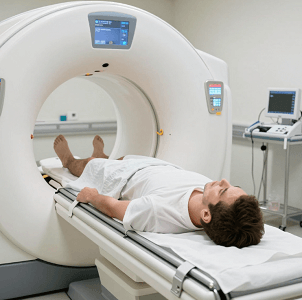
A troubling pattern has emerged in emergency departments across four states, revealing that White patients receive significantly more diagnostic testing than Black patients for common complaints like chest pain, abdominal pain, and nausea.
Researchers examined over 3.6 million emergency department encounters in Kentucky, Maryland, North Carolina, and New Jersey from 2016 through 2018. They found that Black patients discharged from emergency departments were 26 percent less likely to receive diagnostic tests related to their symptoms compared to White patients, even after accounting for income and insurance status.
The disparity raises a complex question: Are White patients receiving unnecessary testing, or are Black patients being undertested and facing more missed diagnoses? The evidence suggests both problems may exist simultaneously.
Previous research supports the overuse interpretation. Medicare patients saw nearly 60 percent more CT imaging during emergency visits between 2005 and 2013, and emergency physicians themselves acknowledge overusing CT scans in surveys. However, Black patients also experience higher rates of missed appendicitis when presenting with gastrointestinal symptoms and are more likely to have undetected heart attacks when seeking care for chest pain.
The researchers point to racial bias in emergency department triage as one possible driver, with studies showing Black patients consistently receive lower-priority assessments than clinically similar White patients. This initial categorization can influence subsequent testing decisions and the level of care patients ultimately receive.
The disparity was most pronounced in emergency departments but largely disappeared for hospitalized patients, suggesting time pressure may amplify the effect of implicit bias.
See: “Race and Ethnicity and Diagnostic Testing for Common Conditions in the Acute Care Setting” (August 27, 2024)