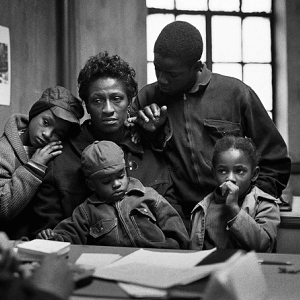
A new study reveals how historical racial oppression shaped reproductive patterns and long-term mortality among Black and White women born during America’s Jim Crow era. Researchers examined over 6,500 women born between 1920 and 1941, finding stark differences in childbearing experiences between racial groups.
Black women from this period were significantly more likely than White women to have either no children or five or more children. These extremes weren’t random. High parity among Black women connected directly to exposure to southern plantation agricultural systems and sharecropping arrangements that defined Jim Crow economics. Meanwhile, childlessness among Black women stemmed primarily from perinatal child loss rather than reproductive choice.
The research uncovered troubling mortality patterns. Women at both extremes—childless and high-parity—faced elevated death risks after their reproductive years compared to those with moderate numbers of children. This U-shaped mortality pattern proved especially pronounced among high-parity Black women born in counties dominated by plantation holdings.
These findings illuminate how geographic, social, and political-economic contexts of the Jim Crow South fundamentally shaped Black women’s reproductive health trajectories. The disparities extended beyond immediate childbearing years, casting long shadows across entire lifespans. For Black women, fertility patterns reflected both oppressive labor systems that encouraged large families and reproductive health challenges that caused devastating pregnancy losses.
The study demonstrates that racial health disparities observed today have deep historical roots in systematic oppression and unequal access to healthcare.
See: “Birthplace, perinatal loss, and the parity-post-reproductive mortality relationship: Evidence from the Jim Crow-era American South” (January 1, 2026)